

Regular roof maintenance helps identify small problems before they become leaks, structural damage, or expensive interior repairs. For homes in Newfane, NY, routine attention is especially useful because roofs must handle snow, freezing temperatures, wind, rain, ice, and repeated seasonal changes.
A roof does not usually fail all at once. More often, damage develops gradually: a flashing seal weakens, a shingle edge lifts, attic ventilation becomes restricted, or water begins collecting in a concealed area. Maintenance provides an opportunity to find these conditions while they are still manageable.
Why does regular roof maintenance matter?
Regular maintenance extends the useful life of roofing materials and helps protect the rest of the house. A well-maintained roof is better able to shed water, resist wind, and manage seasonal stress.
The benefits generally include:
- Earlier detection of leaks and damaged materials
- Lower risk of rot in roof decking, rafters, and wall framing
- Better protection for insulation, ceilings, and interior finishes
- Fewer emergency repairs after storms
- Improved performance of gutters, flashing, and ventilation systems
- More predictable repair costs over time
Maintenance does not make a roof immune to severe weather or age-related deterioration. It does, however, reduce the chance that a minor defect will remain unnoticed until it affects several parts of the home.
How does the local climate affect roof maintenance?
Seasonal weather can expose roofing weaknesses that are not obvious during mild conditions. In the local area, winter snow and ice may place added weight on the roof, while freeze-thaw cycles can widen small cracks and openings.
Wind can lift or loosen shingles, particularly along roof edges, ridges, and areas around roof penetrations. Heavy rain may reveal problems with valleys, chimneys, skylights, plumbing vents, or wall-to-roof intersections. Ice buildup near eaves can also interfere with drainage and allow water to move beneath roofing materials.
Spring is often a useful time to look for winter-related damage, including:
- Missing, cracked, or displaced shingles
- Damaged metal flashing
- Bent gutters or loose downspouts
- Granules collecting in gutter channels
- Water stains in attics or on upper-floor ceilings
- Daylight visible through roof boards
A fall review can help identify conditions that may become more serious during winter, such as clogged drainage paths, weak flashing, or overhanging branches.
What parts of a roof should be checked?
Roof maintenance involves more than looking at the shingles. Water can enter at transitions and penetrations, so several connected components deserve attention.
Shingles or other roof coverings
Look for curling, cracking, blistering, loose tabs, bare patches, and areas where material appears thinner than the surrounding roof. A few damaged shingles may be repairable, but widespread deterioration can indicate that the roof covering is nearing the end of its service life.
Flashing
Flashing directs water away from vulnerable joints. It is commonly found around chimneys, vents, skylights, valleys, walls, and roof edges. Rust, separation, bending, or failed sealant can create leak paths even when the surrounding shingles look acceptable.
Gutters and downspouts
Gutters should carry water away from the roof and foundation. Leaves, ice, sediment, and roof granules can restrict flow. Downspouts should discharge water far enough away from the foundation to reduce the chance of basement moisture or erosion near the walls.
Roof penetrations
Plumbing vents, exhaust vents, antennas, and other penetrations interrupt the roof surface. Their seals and surrounding flashing can deteriorate sooner than nearby materials because they experience movement, temperature changes, and concentrated water flow.
Attic space
The attic can reveal problems before they become visible inside living areas. Check for damp insulation, darkened wood, mold-like growth, rusted fasteners, musty odors, or streaks beneath roof penetrations. Ventilation should also be considered because trapped moisture can contribute to condensation and material deterioration.
How often should a roof be maintained?
A practical schedule includes a visual review at least twice a year, commonly in spring and fall, along with additional checks after major wind, hail, or heavy snow events.
A roof may need more frequent attention if the property has:
- Mature trees near the house
- A low-slope roof section
- Previous leak repairs
- An older roof covering
- Poor attic ventilation
- Areas where snow accumulates
- Moss, algae, or persistent debris
- Nearby construction or recurring wind exposure
A ground-level inspection can identify many warning signs, but walking on a roof can be hazardous and may damage fragile materials. Steep slopes, wet surfaces, ice, and uncertain structural conditions warrant extra caution. Roof access is not necessary for every maintenance task.
Can regular maintenance prevent roof leaks?
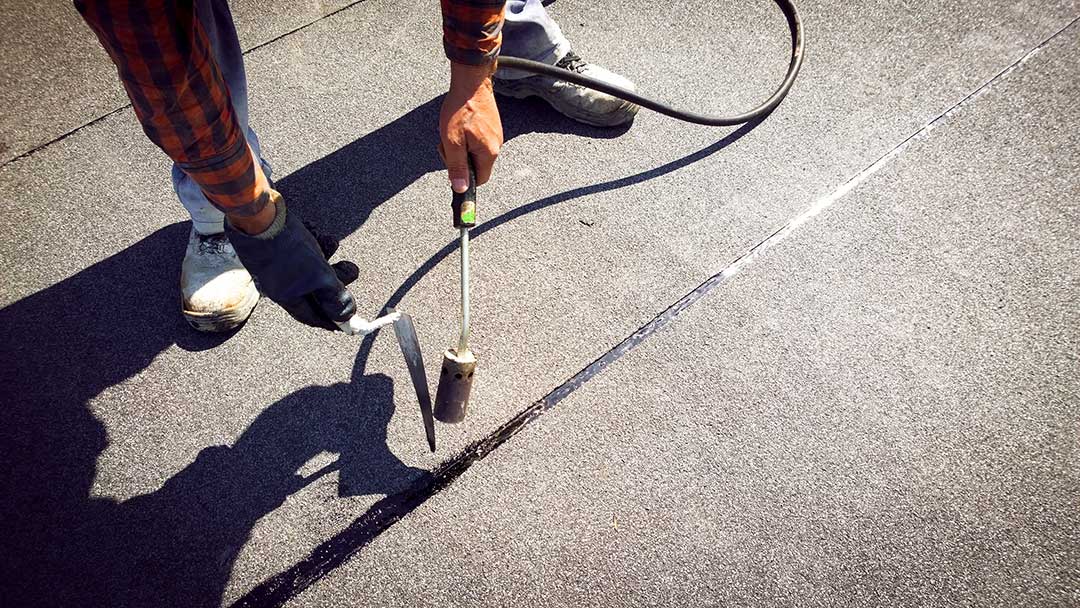
Maintenance can reduce the likelihood of leaks, but it cannot guarantee that a roof will remain watertight indefinitely. Leaks may result from storm damage, age, installation defects, condensation, ice-related conditions, or failures in adjacent walls and drainage systems.
The most useful preventive steps are finding vulnerable areas early, keeping drainage paths clear, replacing damaged materials when appropriate, and monitoring areas where water has entered before. A ceiling stain may not be directly below the source of the leak because water can travel along rafters, decking, insulation, or wall framing.
For that reason, painting over a stain without identifying the source is usually only a cosmetic response. The underlying moisture condition may continue unseen.
What maintenance tasks can homeowners safely perform?
Many basic tasks can be handled from the ground or from a stable ladder position, provided safe practices are followed. These may include:
- Looking for missing or visibly damaged shingles
- Checking gutters for blockages
- Observing whether downspouts discharge properly
- Trimming branches that touch or heavily overhang the roof
- Inspecting attic areas for moisture or daylight
- Reviewing ceilings and upper walls for new stains
- Removing small amounts of reachable debris without stepping onto the roof
Snow and ice removal require particular care. Improper tools or aggressive scraping can damage shingles, membranes, gutters, and flashing. Heavy snow loads, thick ice, sagging roof lines, active leaks, and suspected structural damage are conditions where roof access may be unsafe and specialized evaluation may be necessary.
Does maintenance help with energy efficiency?
Roof maintenance can support energy performance, although it is not a replacement for adequate insulation or air sealing. Moisture in insulation reduces its effectiveness, while blocked or poorly functioning attic ventilation can contribute to condensation and uneven roof temperatures.
A sound roof assembly helps keep insulation dry and allows the attic to manage heat and moisture more effectively. Maintenance should therefore consider the complete system: roof covering, ventilation, insulation, gutters, flashing, and the building envelope around the attic.
Which warning signs should not be ignored?
Some signs suggest that a problem deserves prompt attention rather than routine observation:
- Water entering during or after rain
- A ceiling stain that is growing or returning
- Sagging roof decking or interior ceilings
- Large areas of missing roofing material
- Exposed underlayment or wood
- A damaged chimney or separated flashing
- Persistent dampness or strong musty odors in the attic
- Gutters filled with unusually large amounts of roof granules
- Ice-related damage accompanied by interior moisture
Early attention does not always mean a full roof replacement is necessary. In many cases, the appropriate response may involve correcting drainage, repairing flashing, replacing a limited area of roofing, improving attic ventilation, or addressing moisture from another source.
Regular maintenance is best viewed as a way to understand the condition of the entire roof system. For households dealing with Newfane’s changing seasons, brief inspections and timely correction of small defects can help preserve the roof, protect interior spaces, and reduce the uncertainty that follows major weather events.
