
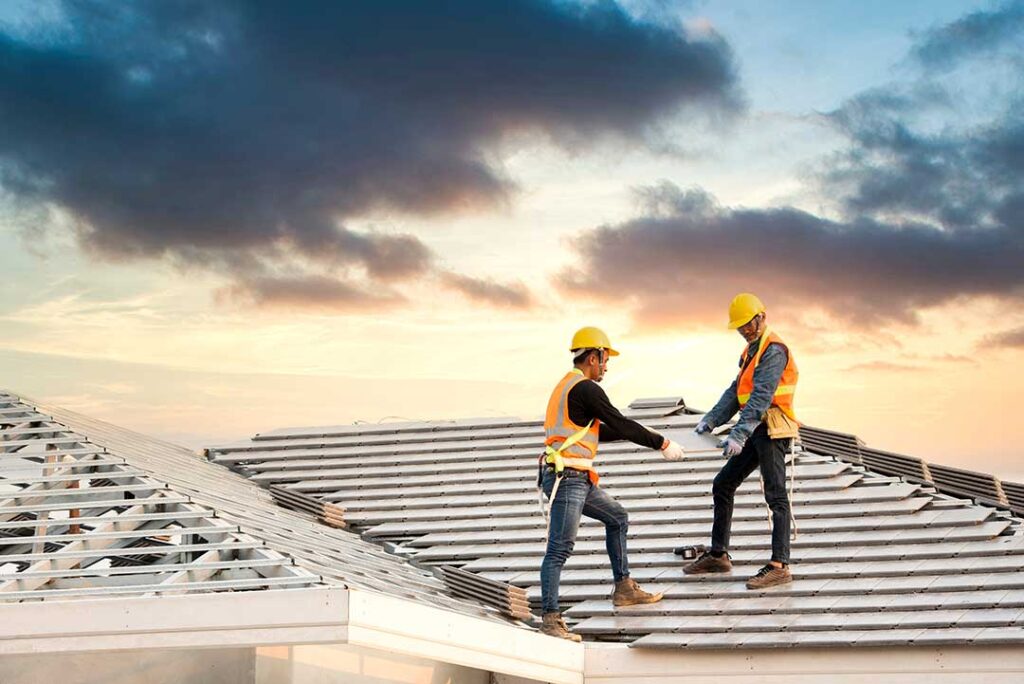
What is the safest way to clean a roof?
For most homes in Newfane, NY, the safest roof-cleaning method is to avoid walking on the roof whenever possible. Use ground-level tools, a stable extension pole, and a cleaning solution suited to the roofing material. Pressure washing should generally be avoided because high-pressure water can remove protective granules, damage shingles, force water beneath roofing materials, and shorten the roof’s service life.
Roof cleaning is mainly intended to remove surface growth and debris, such as:
- Moss
- Algae streaks
- Lichen
- Leaves and small branches
- Dirt and pollen buildup
- Organic material collecting near roof edges
The right approach depends on the roof’s slope, material, age, condition, and accessibility. A low-slope roof over a one-story section may be manageable from a ladder and the ground, while a steep, wet, or deteriorating roof creates a much higher fall risk.
Why can roof cleaning be hazardous?
Roof cleaning combines several hazards that are easy to underestimate. Shingles become slippery when wet, and moss or algae can make them even more difficult to walk on. A person may also lose balance while handling a hose, sprayer, bucket, or long-handled brush.
Other risks include:
- Falls from the roof or ladder
- Slipping on wet shingles
- Breaking brittle or deteriorated roofing materials
- Contact with overhead electrical lines
- Chemical splashes to the eyes or skin
- Damage to siding, landscaping, windows, or exterior finishes
- Falling debris affecting people, pets, or vehicles below
Cool, damp weather can keep roof surfaces wet for longer periods. In this area, seasonal moisture, shaded roof sections, falling leaves, and freeze-thaw cycles can all contribute to slippery conditions or recurring organic growth. Roof work should not be attempted during rain, frost, strong wind, or icy conditions.
How should asphalt shingles be cleaned?
Asphalt shingles are commonly cleaned with a low-pressure application of an appropriate roof-cleaning solution, followed by natural rinsing from rain. The solution should be compatible with asphalt roofing and used exactly as directed on its label.
A cautious process usually looks like this:
1. Inspect the roof from the ground for missing shingles, exposed underlayment, sagging areas, loose flashing, or damaged gutters.
2. Remove loose leaves and branches with a soft roof rake or long-handled brush, working gently from the edge.
3. Protect nearby plants by wetting them with clean water and covering sensitive vegetation temporarily with breathable protection.
4. Apply the cleaning solution from a ladder or ground position, avoiding unnecessary roof access.
5. Allow the solution to work for the recommended period without letting it dry excessively on surrounding surfaces.
6. Rinse nearby siding, windows, plants, and paved areas thoroughly.
7. Allow dead growth to loosen and wash away naturally rather than scraping aggressively.
Do not scrub asphalt shingles with a stiff brush. Scrubbing can loosen granules, create bare patches, and make shingles more vulnerable to ultraviolet exposure and weathering. Do not use a pressure washer on the roof surface.
Should moss be scraped off a roof?
Heavy moss should not be forcibly pulled or aggressively scraped from shingles. Moss can grow around shingle edges and beneath overlapping sections, so removing it with force may tear shingles or lift their protective surfaces.
For light growth, a soft brush or roof-safe rake may help loosen material, but the tool should be used in a downward direction that follows the shingle layout. Never brush upward against the overlapping edge. For extensive moss, the safest option may be to limit roof access and address the underlying moisture and shade conditions instead.
Moss often returns where branches keep a roof shaded, leaves remain trapped, or roof drainage is poor. Cleaning the roof without reducing those conditions may provide only temporary improvement.
Can bleach be used to clean a roof?
Some roof-cleaning methods use diluted chlorine-based solutions, but household bleach is not automatically safe for every roofing material, plant, or exterior surface. Concentrated or improperly mixed solutions can damage vegetation, corrode metal, discolor siding, and irritate skin or lungs.
If a chlorine-based cleaner is considered, read the product label carefully and follow its dilution, application, ventilation, storage, and disposal instructions. Never mix bleach with ammonia, acids, or other cleaning products. Dangerous gases can form.
A roof-cleaning solution should never be applied in a way that allows runoff to enter a pond, drainage ditch, storm drain, or neighboring property. Protecting the surrounding environment is part of cleaning safely.
What roof materials require special care?
Different roofing materials respond differently to cleaning:
- Asphalt shingles: Use low pressure and avoid abrasive scrubbing.
- Wood shingles or shakes: Excess water and harsh chemicals can damage the wood and encourage further deterioration.
- Metal roofing: Avoid abrasive tools that scratch protective coatings. Check for rust, loose fasteners, and damaged sealants.
- Clay or concrete tile: Tiles can crack under concentrated foot traffic or pressure. Walking may be unsafe even when the roof appears sturdy.
- Flat or membrane roofing: Punctures, standing water, and incompatible chemicals can cause leaks or membrane damage.
- Older roofing: Aging materials may be brittle and more likely to break during cleaning.
If the roof material is unknown, cleaning should wait until the material and its maintenance requirements are identified. A roof that already has leaks, widespread granule loss, loose sections, or visible structural problems should not be treated as a routine cleaning project.
How can gutters, trees, and roof edges be cleaned safely?
Roof cleaning should include a careful look at the drainage system, but gutters should not be used as a substitute for ladder support. Never stand on a gutter, and do not place a ladder against fragile gutter sections.
From a secure ladder position, remove leaves and sediment with a scoop or gloved hand. Keep three points of contact on the ladder, and have another adult stabilize it when practical. A ladder should stand on firm, level ground and remain clear of doors, traffic, and overhead hazards.
Tree branches that touch or closely overhang the roof can drop leaves and keep shingles damp. Small reachable twigs may be removed from the ground with a pole tool. Larger branches, unstable limbs, or work near utility lines require specialized safety precautions and should not be handled casually.
When should roof cleaning be left to a qualified roofing worker?
Roof cleaning should not be a do-it-yourself task when the roof is steep, more than one story high, wet, icy, fragile, heavily moss-covered, or difficult to access safely. Extra caution is also needed when the work requires walking near skylights, chimneys, valleys, dormers, solar equipment, or roof edges.
Stop immediately if shingles begin to lift, granules collect heavily in gutters, water enters the attic, or the roof surface flexes underfoot. Safety equipment such as fall protection must be properly selected, anchored, and used; simply wearing a harness without a suitable anchor does not make roof work safe.
For many households, the safest maintenance plan is preventive: keep gutters clear, trim vegetation away from the roof, remove loose debris from ground level, and inspect the roof after major storms. In a climate with wet seasons, falling leaves, snow, and repeated freezing and thawing, preventing buildup is usually less damaging than repeatedly treating a roof after heavy growth has developed.
